Ask three different sources whether Bucktown is a Chicago Landmark District and you will get three different answers. One neighborhood guide states plainly that the area was designated a Chicago Landmark District in 1991. Multiple contractors who work on Bucktown properties every week say the opposite: that most of the neighborhood carries no landmark designation at all, and that renovation permits move through the city's standard review process rather than the Commission on Chicago Landmarks.
Both can't be right. But the disagreement itself is the useful part, because it points to a mistake that costs real money on a rehab budget: treating "Bucktown" as a fixed, legal boundary when it has never been one.
The Boundary Problem Nobody Mentions
Bucktown's own historical record admits this up front. Longtime residents disagree about where the neighborhood actually starts and ends. Some trace the boundaries back to the original 1850s settlement of Holstein, roughly Fullerton, Damen, Armitage and Western. Others consider Bucktown to stretch much further, out past North Avenue to the Chicago River. Neither version is wrong. Neither is official. Chicago's neighborhood names were never drawn by ordinance the way landmark districts are.
Chicago Landmark Districts, on the other hand, are drawn by ordinance, block by block, with exact address ranges written into City Council legislation. The Commission on Chicago Landmarks reviews permit applications only for properties that fall inside those legally defined lines, whether that's a single designated building or a full district. A guide that says "Bucktown is a landmark district" is making a neighborhood-scale claim about something that only exists at parcel scale. That mismatch is exactly why two sources looking at the same streets can land on opposite conclusions.
For an investor underwriting a two-flat or a worker's cottage, this isn't trivia. It's the difference between a permit that clears in a few weeks and one that adds months of review, design revisions, and carrying costs you didn't budget for.
What Landmark Review Actually Adds to a Timeline
When a property does sit inside a designated Chicago Landmark District, the review process is real and it is not fast. The Commission examines exterior work, additions, and demolitions to confirm they meet the Secretary of the Interior's Standards for Rehabilitation, and city guidance encourages owners to file a pre-permit submission before applying for a building permit at all, specifically so landmark requirements get clarified up front rather than discovered mid-project.
In practical terms, standard residential permits in Chicago typically move in four to six weeks. Properties inside a historic district add another two weeks or so on top of that. Properties with actual individual landmark designation can run eight to twelve weeks before a permit issues. For a gut rehab already budgeted at four to eight months, that spread matters. It's the difference between a lender's interest reserve holding and running short.
The point is not that landmark review is something to avoid. It's that whether it applies to a specific Bucktown property is not something you can determine by knowing the neighborhood name. You determine it by knowing the address, ideally before you write an offer, not after your architect's plans come back with unexpected conditions attached.
The Friction That Actually Slows Down a Bucktown Rehab
Here's the part that gets buried under the landmark debate: for most buyers in this neighborhood, permit review isn't the bottleneck at all. What actually slows a Bucktown project down is what's behind the walls.
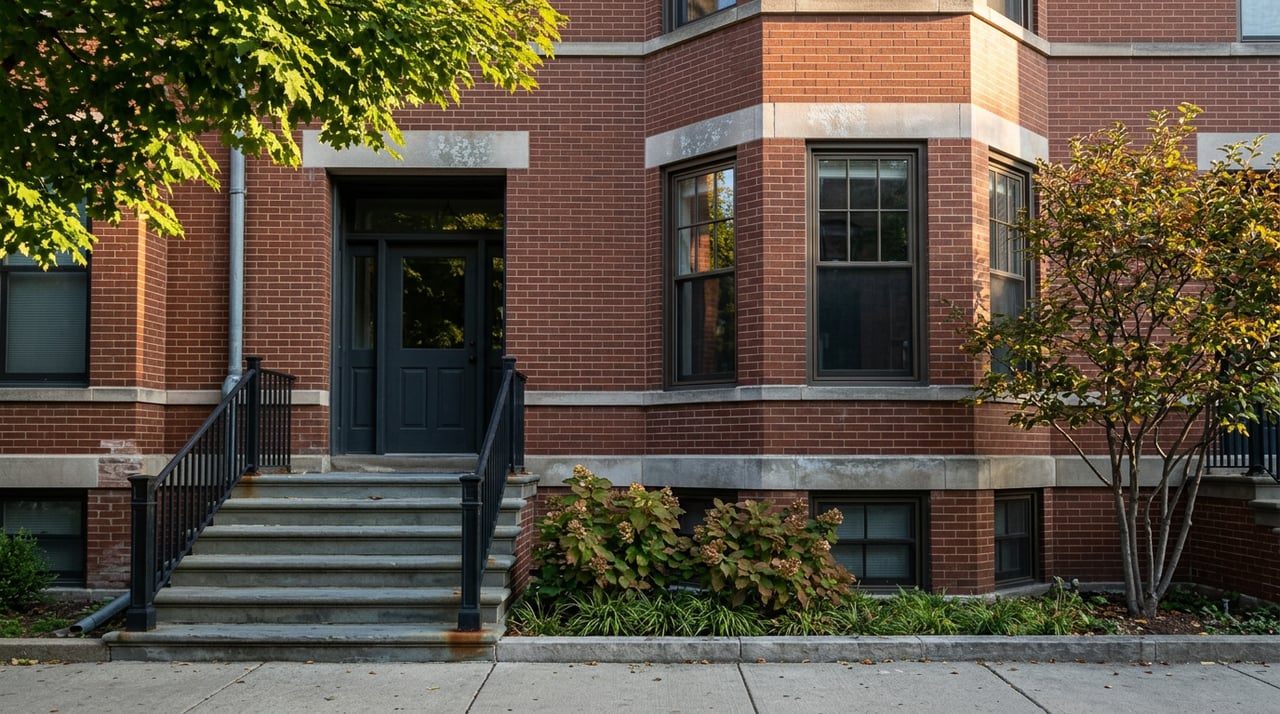
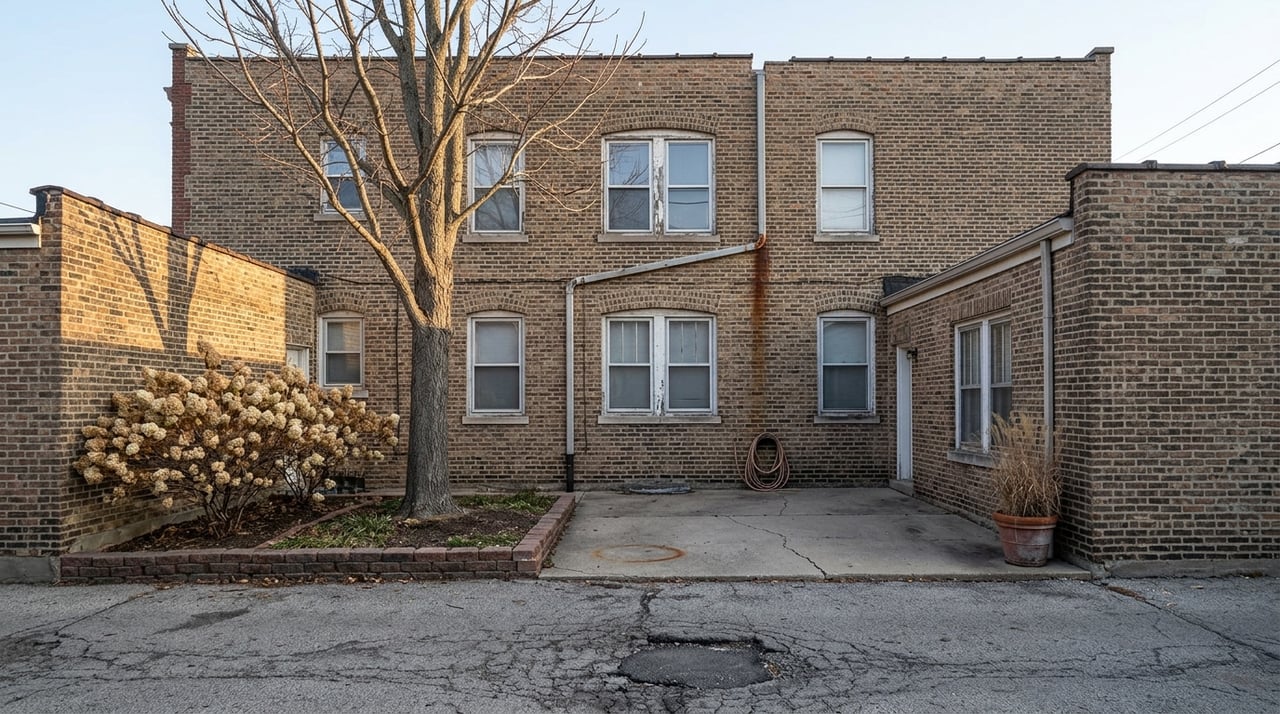
The neighborhood's worker's cottages date to the period right after the Chicago Fire, when new fire limits pushed frame construction out of the central city and onto smaller lots, often 24 or 25 feet wide. Builders framed cheap and framed fast. That means balloon framing shows up often, along with knob-and-tube wiring that most lenders and insurers want addressed before closing, not after. Cast-iron plumbing and raised basements, sometimes six to eight feet of unfinished space that reads as a rec room on a listing but a full mechanical overhaul in practice, are common enough that any contractor who works this neighborhood regularly will ask about them before asking about landmark status.
If your property was built before 1978, add lead and asbestos abatement to the pre-demo checklist, typically running $3,000 to $12,000 depending on scope. None of this shows up in a Commission review. All of it shows up in a contractor's pre-demo inspection, which is the report that should actually be shaping your offer price and your contingency reserve, not a guess about neighborhood-wide landmark rules.
A short way to hold both facts at once:
- What buyers worry about: Will the Landmarks Commission slow down my permit and dictate my windows?
- What actually slows the project: Balloon framing, knob-and-tube wiring, and raised-basement conditions that only show up once demo starts.
The first is worth a five-minute address lookup. The second is worth a contingency line that's 10 to 25 percent of your renovation budget, not an afterthought.
What This Means for the Deal Math
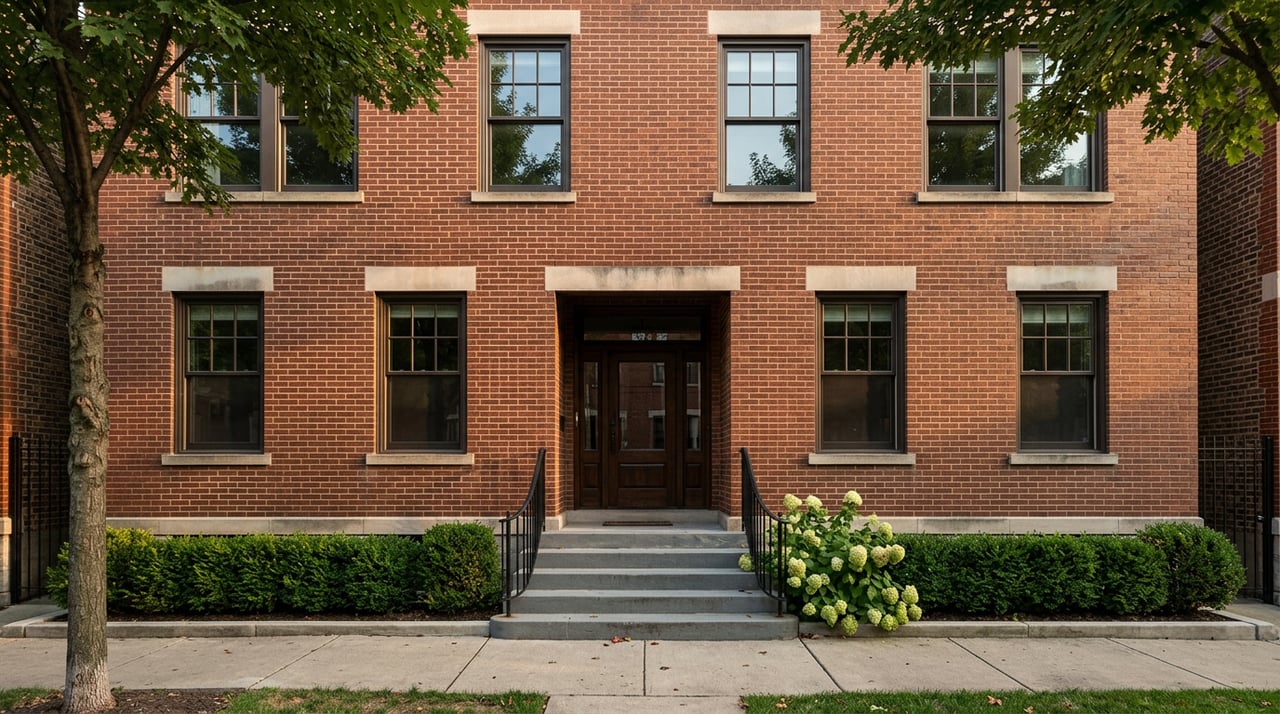
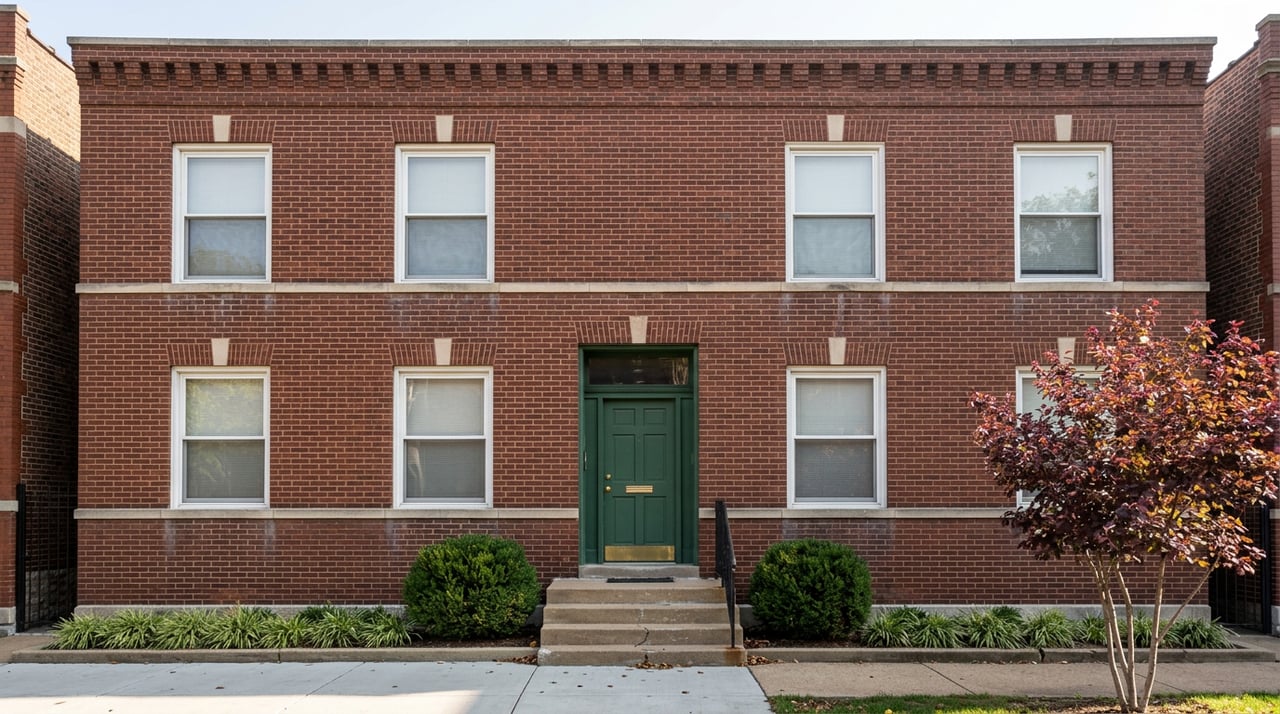
Well-maintained two- to four-unit buildings in Bucktown have traded in the $700,000 to $1.3 million range in 2026, a band that sits below what buyers pay for comparable multi-unit inventory in Lincoln Park and Lakeview. A full gut rehab in Chicago currently runs $100 to $300 per square foot, with most complete projects landing between $150,000 and $400,000 depending on finish level and structural scope, and a realistic timeline of four to eight months from permit to completion. Reported returns on that spend run 70 to 90 percent depending on location and execution, which is a wide enough range that the difference between a good outcome and a mediocre one usually comes down to whether the buyer priced the actual structural risk correctly rather than the perceived regulatory risk.
That's the thesis in one sentence: the investors who lose money in Bucktown aren't the ones who got surprised by a landmark review. They're the ones who didn't get surprised by anything, because they never budgeted for the surprise in the first place.
The Neighborhood Underneath the Spreadsheet
None of this happens in a vacuum. Bucktown's rental demand is anchored by the kind of foot-traffic identity that doesn't show up in a pro forma: Holstein Park, named for the 1854 immigrant settlement that anchored this stretch of the city long before the neighborhood took its current name; the Flatiron Arts Building, a longtime gallery anchor near the six corners; a Damen Avenue shopping corridor that draws beyond the immediate blocks; and the Bloomingdale Trail, better known as the 606, an elevated path for walkers, joggers, and cyclists that cuts through the neighborhood. Add a nightlife strip that includes long-running spots like Danny's Tavern and Estelle's, and you get the young-professional renter base that keeps two-flat and three-flat units leased quickly once a rehab is finished.
The Wicker Park & Bucktown Chamber of Commerce manages the local special service area and runs neighborhood programming that reinforces exactly this kind of organic, stay-put demand rather than transient turnover, which is part of why days on market here tend to run below the city average even in a competitive rate environment.
Common Questions
Do I need Commission on Chicago Landmarks approval to renovate a house in Bucktown? It depends entirely on the address, not the neighborhood name. Before writing an offer, check whether the specific parcel sits inside a designated Chicago Landmark District. The city's Historic Preservation Division reviews permits only for properties that fall inside those legally defined boundaries, and a pre-permit submission is the fastest way to get a definitive answer before you're under a contract deadline.
How much longer does landmark review actually add to a permit timeline? Standard residential permits typically clear in four to six weeks. Properties inside a historic district often add another two weeks. Properties with individual landmark designation can run eight to twelve weeks. Build whichever applies into your carrying-cost assumptions before you close, not after.
Does landmark status hurt resale value? The available evidence points the other way. Studies on landmark designation have generally found no negative effect on property values, and some buyers treat the designation as a selling point. The bigger value driver in this neighborhood remains execution: how well the structural surprises were managed, not whether a building carries a landmark plaque.
If you're underwriting a Bucktown rehab and want a second set of eyes on the address-level details before you write an offer, Joe Kotoch Group can walk through the permit history, the structural risk profile, and the exit math with you. Start a strategic conversation before the surprises start finding you.