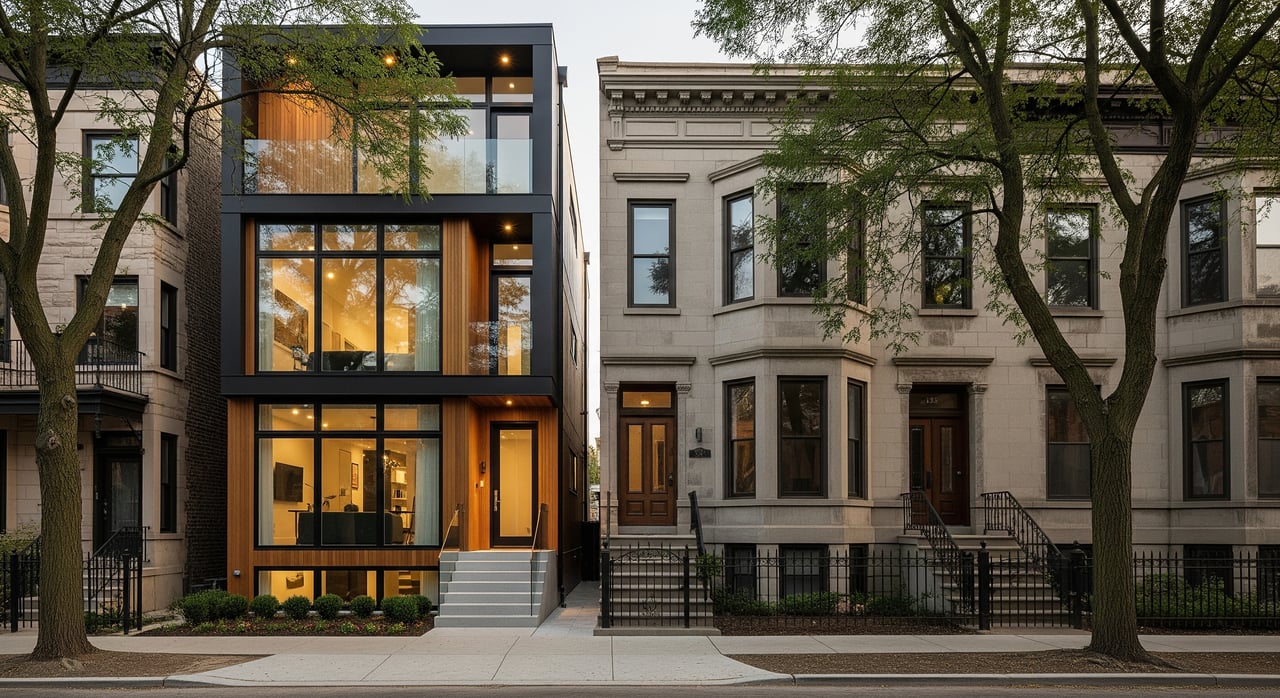
Are you torn between the polish of a new Bucktown build and the character of a renovated vintage home? You want value, speed, and livability, and you do not want to overpay for finishes or miss a hidden premium like lot width or parking. In this guide, you will learn how the price gap between new and vintage plays out in Bucktown, what drives it, and a simple way to compare homes side by side. You will also get a clear framework to estimate renovation upside if you are investing. Let’s dive in.
Bucktown at a glance
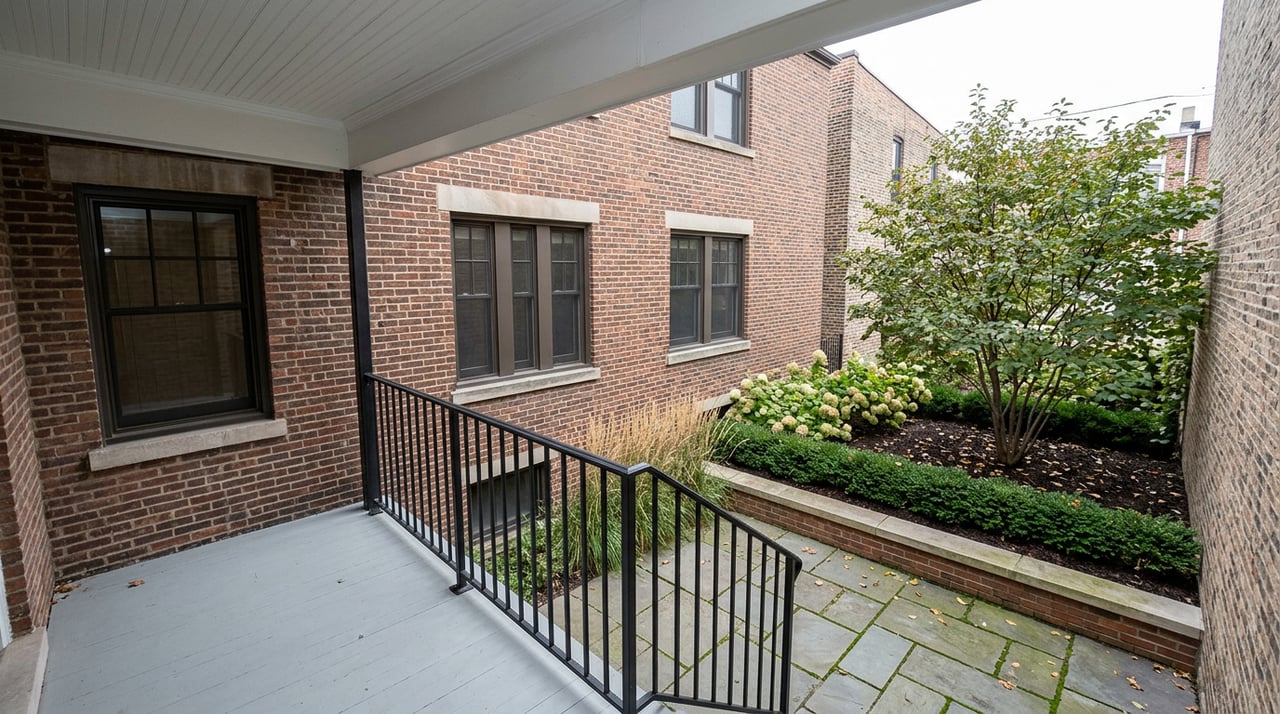
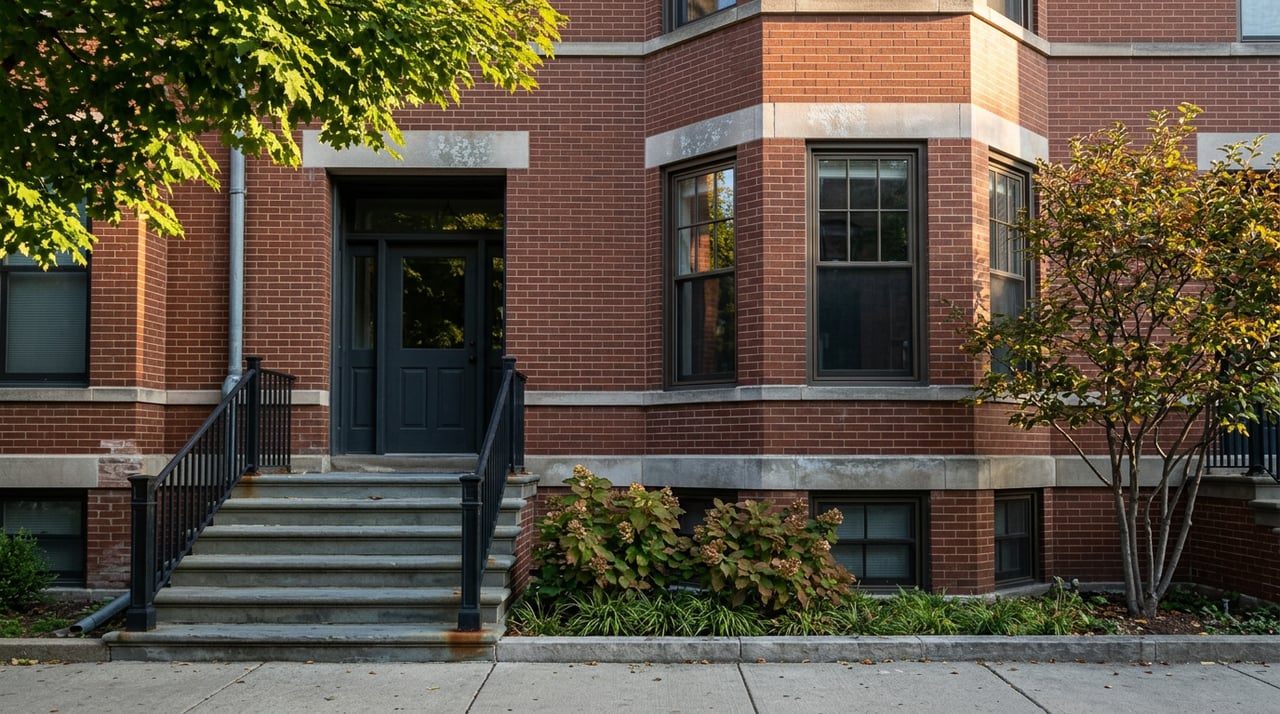
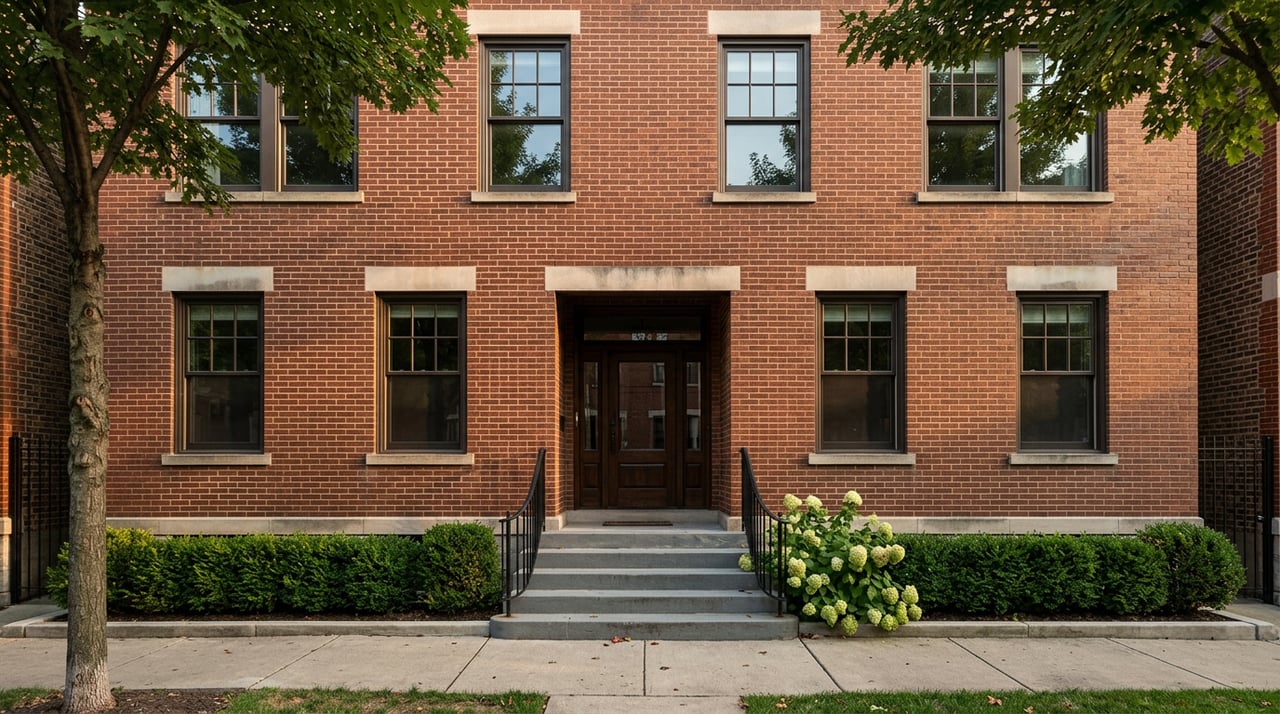
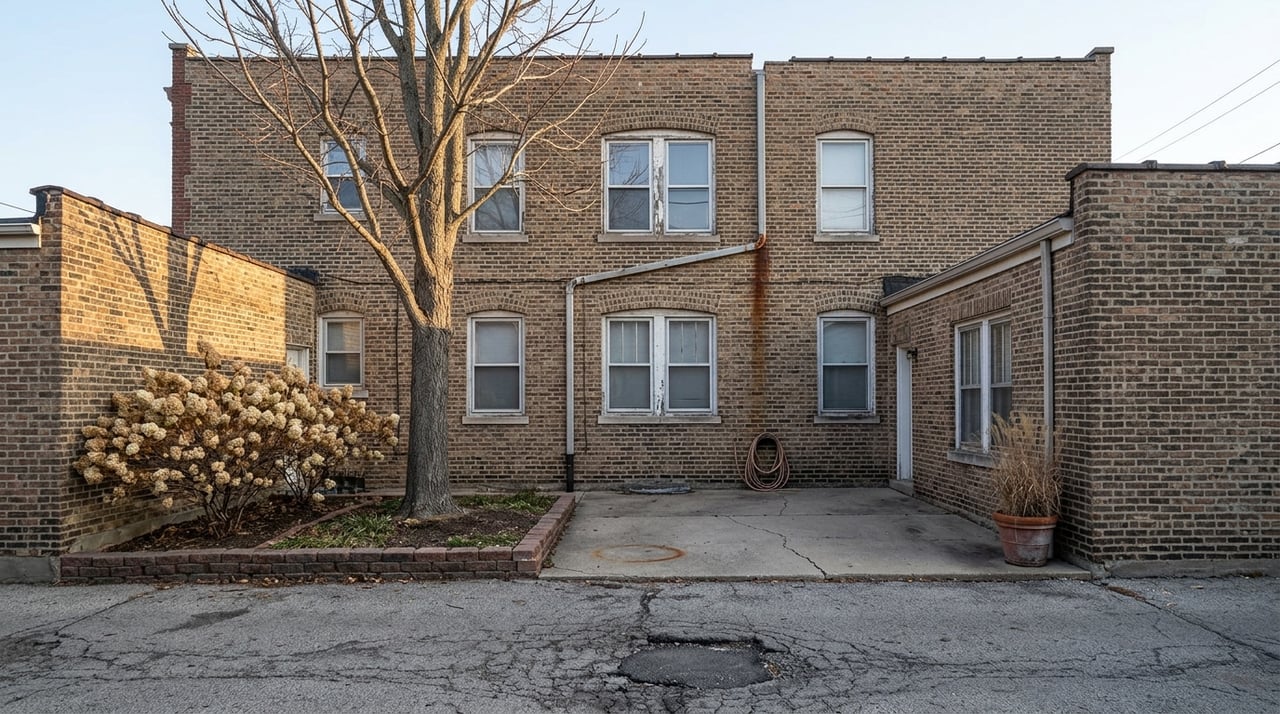
Bucktown blends historic greystones, brick rowhouses, and multi-unit conversions with a steady stream of gut rehabs and infill new construction. Many homes sit on narrow 25-foot city lots, while a smaller share of wide-lot properties command stronger premiums. Walkability, Blue Line access, and proximity to Wicker Park and Logan Square help support pricing across product types.
Supply is constrained by zoning and the existing historic fabric, which limits easy new-build infill on some blocks. That mix creates two clear buyer lanes in Bucktown: those who want turnkey modern layouts and low maintenance, and those who value architectural character with thoughtful updates.
What drives the price gap
Multiple factors create the price-per-square-foot and velocity differences between new construction and renovated vintage in Bucktown. The biggest drivers include:
- Finishes and layout quality
- Lot width and usable outdoor space
- Parking type and count
- Age and condition of mechanicals and systems
- Presence of unique historic features
- Inventory and pipeline constraints by product type
Understanding these elements helps you isolate why one home trades faster or at a higher PSF than another.
How to measure price and speed
A clean comparison starts with consistent definitions and like-for-like comps.
Core metrics to track
- Price per square foot: sale price divided by finished living square feet. Use the same square-footage definition across comps.
- Days on market: a signal of demand and pricing accuracy.
- Sale-to-list ratio: shows how far sale prices deviate from asking.
- Absorption speed: share of homes selling within 30, 60, or 90 days.
Set up apples-to-apples comps
- Filter by property type. Compare single-family to single-family, not to condos.
- Normalize square footage. Be explicit about whether finished basement space is included and apply that method consistently.
- Separate product types. Track new builds, gut-renovated vintage, and lightly updated vintage. You can use listing remarks and year built to create clear flags.
- Control for lot width and parking. In Bucktown, a standard 25-foot lot is common, so be careful when comparing to wider lots.
- Use a recent time window. A rolling 12 to 24 months keeps results relevant and smooths seasonality.
Lot width and parking premiums
In a neighborhood of mostly 25-foot lots, additional width meaningfully improves layout, natural light, and outdoor space. That shows up in both price and speed. Parking access, especially a private garage, is also a strong differentiator because adding it later can be costly or infeasible.
Use this quick checklist when you compare two Bucktown homes:
- Lot width: 25 feet or wider? If wider, how does it improve floorplan or yard usability?
- Parking: none, pad, one-car garage, or two-car garage? How easy would it be to add if missing?
- Alley access: does the site accommodate a garage given Chicago alley and curb cut constraints?
- Outdoor space: is there a functional rear yard, deck, or rooftop that adds livability?
Treat lot width and parking as discrete attributes when you price; they are not fully captured by interior square footage alone.
Finishes and layout value
High-end, cohesive finishes and modern layouts often command a PSF premium and sell faster. You can quantify quality with a simple finish score so you are not guessing.
Consider scoring each comp from 0 to 100 across:
- Kitchen: cabinet quality, appliance package, counters, ventilation
- Bathrooms: tile, fixtures, shower and tub quality
- Flooring and trim: hardwood type, millwork, doors
- Systems and windows: age and efficiency
- Ceiling height and light: perception of volume and window quality
- Layout: openness, circulation, storage, and functional zones
Two practical tips: look closely at professional photos to stay consistent, and use listing descriptions to confirm material brands and system upgrades.
Systems and maintenance risk
Buyers pay to avoid near-term capital expenditures. New or recently updated HVAC, plumbing, electrical, roofing, and windows reduce perceived risk, especially for non-investor buyers who want low maintenance. When you price a vintage home with older systems, factor expected near-term costs as a discount against market value.
Historic character and uniqueness
Original details like millwork, stained glass, and exposed brick can create emotional pull. These features are not uniformly rewarded. Premiums tend to appear at the upper end of the vintage market where buyers value authenticity and quality craftsmanship alongside modern function. Treat character as a qualitative bump layered on top of core attributes like layout, lot, and systems.
Build a simple valuation model
A small, data-backed model helps you separate what is “new-build premium” from what is simply better finishes or a wider lot.
Recommended approach
Use a hedonic regression with price per square foot as the dependent variable and the following as inputs:
- NewBuild: 1 if new construction, 0 if vintage
- FinishScore: 0 to 100, based on the rubric above
- LotWidth: in feet; center your baseline at 25 feet
- Parking: ordinal variable, from none to two-car garage
- Age or YearBuilt: captures remaining useful life and risk
- Beds, baths, finished square footage
- Micro-location controls: block, street, or zip indicators
The coefficient on NewBuild represents the average Bucktown premium for new construction after controlling for measured differences in finish, lot, parking, and size. That tells you how much of the gap is style and age versus fundamentals.
Simple additive formula
Price_per_sqft = Base_psf + β_finish × FinishScore + β_lot × (LotWidth − 25) + β_park × ParkingScore + β_age × Age + ε
- Base_psf is your Bucktown baseline for a 25-foot lot, average finishes, and no garage.
- Calibrate β values using recent MLS sales and consistent square-footage rules.
Once calibrated, you can price individual homes more precisely and see which upgrades move the needle most in Bucktown.
Renovation upside for investors
If you are buying vintage with plans to renovate, quantify upside before you swing a hammer.
Renovation upside = (Post-renovation Market PSF − Current Market PSF) × Finished Sq Ft − Renovation Cost − Transaction Costs − Holding Costs
Follow these steps:
Define your finished product. For example, a gut-renovated vintage home targeting a FinishScore of 80 with refreshed systems.
Pull the right comps. Use Bucktown sales that match your target product class on lot width, parking, and layout.
Estimate sale price. Apply your calibrated PSF to the planned finished square footage and note the time window used.
Price the work. Include hard costs, soft costs, permits, financing, taxes during hold, staging, and disposition.
Run sensitivities. Test lower sale prices, longer DOM, and cost overruns to stress the deal.
Permitting and parking feasibility can be pivotal in Chicago. Account for alley access and curb cut constraints early, and factor permit timelines into your underwriting and schedule.
How to choose between new and vintage
Both paths can be right in Bucktown. Use your priorities to guide the decision.
- Choose new construction if you want modern layouts, high energy efficiency, and minimal near-term maintenance. Expect stronger PSF, especially with a wider lot and garage.
- Choose renovated vintage if you value character and see potential to add targeted upgrades. Your entry price may be lower, and thoughtful improvements can narrow the gap on resale.
- Focus on fundamentals. Lot width, parking, and finish level often outweigh year built in driving both price and speed.
- Watch market banding. At certain price points, the buyer pool shrinks. Compare DOM and sale-to-list ratios by product type and price bracket to understand absorption.
Your next steps in Bucktown
If you want clarity on the Bucktown price gap for a specific address or project, build your analysis with local data and a consistent method. That means pulling recent MLS sales, scoring finishes, normalizing square footage, and adjusting for lot width and parking.
You do not need to do it alone. Our team can help you:
- Assemble a Bucktown-specific comp set by product class and lot width
- Calibrate a simple PSF model you can reuse for search and offers
- Underwrite renovation scope, costs, and expected resale with sensitivity cases
- Evaluate parking and permit feasibility before you commit
- Source off-market and coming-soon opportunities that fit your brief
Ready to compare homes or price a project with confidence? Start a strategic, data-backed conversation with the Joe Kotoch Group.
FAQs
How should I compare Bucktown new builds and renovated vintage on price per square foot?
- Use like-for-like comps, normalize finished square footage, and adjust for lot width, parking, and finish level; then estimate PSF with a simple model so the “new-build effect” is isolated.
What is the best way to account for finished basements in Bucktown pricing?
- Choose one consistent rule for square footage across all comps, document it, and apply it to both new and vintage properties so PSF comparisons remain fair.
How much does a wider Bucktown lot typically add to value?
- Wider lots often earn premiums because they improve layout and outdoor space; treat lot width as a distinct variable and quantify its effect from recent Bucktown sales.
Do garages materially change pricing and speed in Bucktown?
- Yes, off-street parking, especially a private garage, increases desirability and is costly to add later on many lots; model parking as a separate attribute when pricing.
How can I value high-end finishes versus mid-grade finishes?
- Create a finish score covering kitchens, baths, flooring, systems, ceiling height, and layout; then correlate that score with PSF across recent comps to reveal the premium.
What should investors consider about Chicago permitting for Bucktown rehabs?
- Factor permitting timelines and alley or curb cut constraints into both feasibility and schedule; confirm parking feasibility early because it can be difficult to add later.