Curious why more buyers and investors are paying attention to Avondale? This North Side neighborhood offers something that can feel hard to find in Chicago: a grounded, lived-in residential character with visible signs of change. If you are trying to understand what Avondale is really like, from its housing stock to its dining scene and transit access, this guide will help you get a clearer picture. Let’s dive in.
Avondale at a Glance
Avondale is Chicago’s community area 21, located about six miles northwest of the Loop. Its history is closely tied to the North Branch of the Chicago River, Milwaukee Avenue, and rail corridors that helped shape the neighborhood’s growth over time.
Historically, Avondale developed as a working-class area with strong ties to rail and industry. According to the Encyclopedia of Chicago, the neighborhood’s story includes clay pits and brick factories near Belmont Avenue, a significant Polish presence in the early 20th century, and later growth in the Latino population.
Today, Avondale remains a neighborhood with a strong sense of continuity, but it is also evolving. The latest CMAP community snapshot reports 35,489 residents, a median age of 34.7, and a median household income of $92,645.
Why Avondale Feels Different
One of Avondale’s biggest strengths is that it still feels human-scaled. Unlike parts of Chicago defined by high-rise development, Avondale remains largely low-rise, with blocks shaped by older residential buildings and industrial-era patterns.
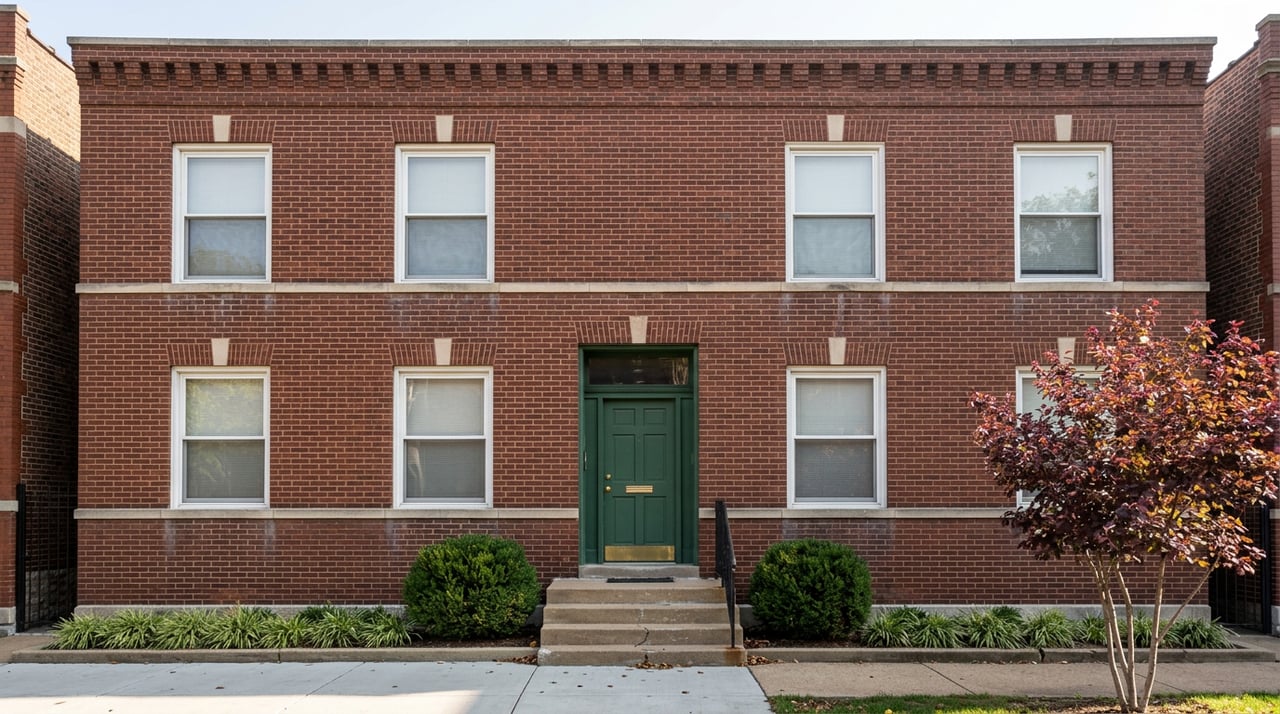
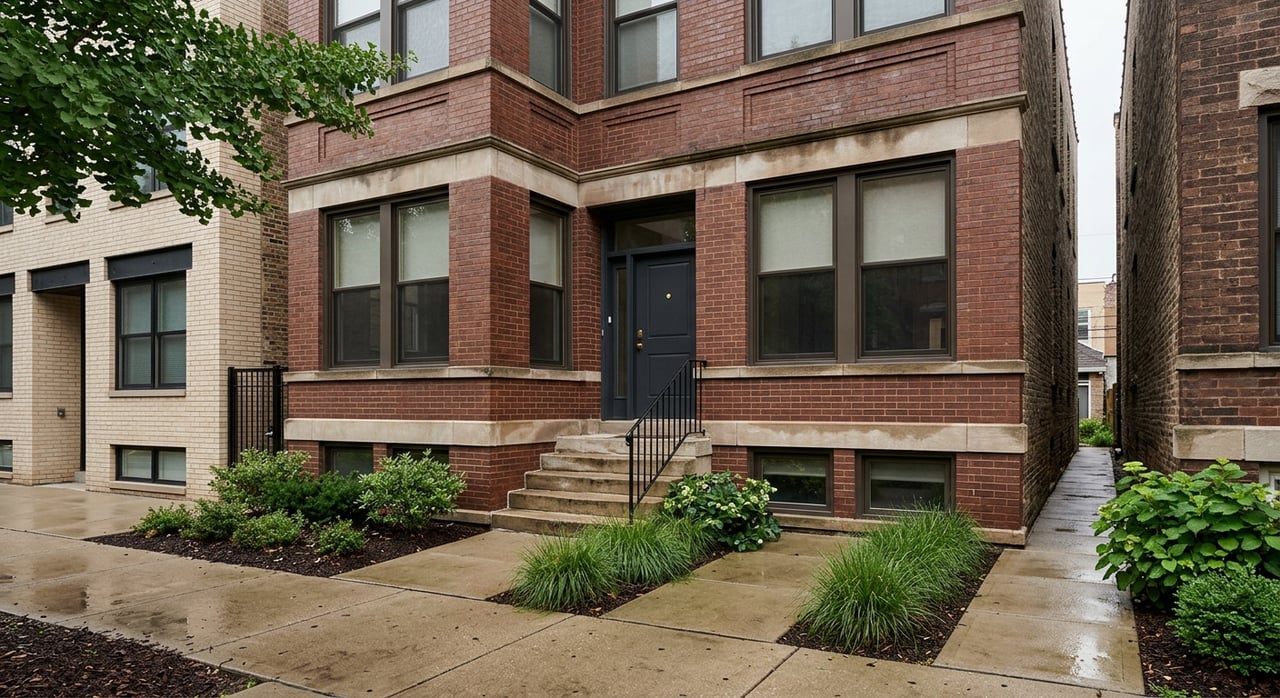
The Chicago Architecture Center describes Avondale as a diverse working-class neighborhood known for two-flats, bungalows, and workers cottages. That description lines up with CMAP data showing that 55.3% of housing units were built before 1940, with a median year built of 1935.
That older housing base gives the neighborhood texture. It also helps explain why Avondale often appeals to buyers who want classic Chicago building types instead of a more vertical, newer-construction environment.
Avondale Housing Stock
If you are exploring Avondale as a buyer or investor, the housing mix is one of the first things to understand. This is not a neighborhood dominated by one product type.
Based on CMAP data, 28.1% of units are in 2-unit buildings, 30.5% are in 3- or 4-unit buildings, and 17.3% are detached single-family homes. In addition, 57.6% of occupied units are renter-occupied.
That combination creates a classic Chicago middle-density feel. You will see the kinds of building patterns that often attract a wide range of buyers, including people looking for a condo or single-family home as well as those interested in 2 to 4 unit properties.
What That Means for Buyers
For lifestyle buyers, Avondale can offer housing types that feel more established and practical than flash-driven. Older homes and small multifamily buildings often come with more architectural character and a stronger sense of neighborhood continuity.
For owner-occupants considering a house hack or buyers looking at small multifamily opportunities, Avondale’s building mix stands out. The concentration of 2-unit and 3- to 4-unit properties makes the neighborhood especially relevant if you want to evaluate both lifestyle fit and long-term property performance.
Where Change Is Happening
Avondale is best understood as a neighborhood in transition. It still has a historically working-class, low-rise foundation, but visible development activity shows how the area is changing.
Recent construction and redevelopment activity has been clustering near Belmont, Elston, California, and the neighborhood’s northwest industrial edge. One of the most notable examples is the Belmont Triangle redevelopment initiative, centered at Belmont, Pulaski, and Milwaukee.
Other reported projects include a proposed mixed-use development at 3122 W. Belmont, a residential redevelopment at 3265 N. California, and a new mixed-use building permitted at 3219 N. Elston. The approved expansion of the Puerto Rican Arts Alliance at 3010 and 3006 Elbridge also reflects a growth pattern that includes restoration and adaptive reuse.
Another example of that trend is the proposal to convert the former St. Wenceslaus School into apartments. Taken together, these projects suggest that Avondale’s growth is not just about ground-up construction. It also includes reuse of existing buildings, which often helps preserve the neighborhood’s built character while adding new residential options.
Dining and Daily Life
For many people, Avondale’s dining scene is one of the clearest signs of its momentum. What was once more under the radar is now getting broader citywide attention.
Choose Chicago’s Avondale guide highlights a range of local spots, including Mirabella Italian Cuisine, eden, CheSa’s Bistro & Bar, Soul & Smoke, Revolution Tap Room, Avondale Bowl, TriBecca’s Sandwich Shop, Parachute-HiFi, and The Little Lark. That mix points to a neighborhood with both long-running staples and newer destination businesses.
Eater’s Avondale map reinforces that variety, describing a scene that spans sandwiches, Irish pubs, prix fixe dining, Korean and other Asian-influenced restaurants, and neighborhood bars. In simple terms, Avondale’s food scene is not limited to one block or one style.
A Neighborhood That Still Feels Grounded
Even with that growth, Avondale has kept a more down-to-earth identity than some nearby areas. The Chicago Architecture Center notes that the neighborhood has welcomed new bars, restaurants, startups, and infill residential construction as development pressure has moved north from Logan Square.
That makes Avondale appealing if you want a neighborhood that feels active but not over-polished. It is established enough to feel rooted, yet dynamic enough to feel like there is still room for change.
Transit and Connectivity
Transit is another reason Avondale continues to draw attention. If you are comparing North Side neighborhoods, this is an area where rail and bus access can support a car-light lifestyle, even though many residents still drive.
The Addison Blue Line station at 3622 W. Addison is one of the neighborhood’s key rail connections. CTA lists the station as accessible and directly on the Blue Line.
CTA has also described the Belmont Blue Line station and bus terminal as an important Avondale transit hub, connecting the Blue Line with the #77 Belmont and #82 Kimball/Homan buses. The #77 Belmont route page is also useful for late-night commuters because it shows overnight service.
Regional access has improved as well. According to Metra, the Grayland Station and Milwaukee Avenue bridge project was completed in August 2025, and the station now serves residents of Irving Park and Avondale with ADA-accessible access.
What the Numbers Say
Transit use in Avondale is higher than the citywide average in the latest CMAP snapshot. The report shows that 22.6% of commuters use transit, compared with 19.3% citywide, and the mean commute time is 34.6 minutes.
Those numbers help explain why the neighborhood can work for buyers who do not want to rely entirely on a car. Access to the Blue Line, key bus routes, and nearby Metra service gives Avondale a practical edge.
Who Avondale May Appeal To
Avondale can make sense for several types of buyers because the neighborhood does not fit into a single lane. Its appeal comes from the combination of established housing, current redevelopment, destination dining, and practical transit.
You may find Avondale worth a closer look if you are:
- Looking for a low-rise North Side neighborhood with older housing stock
- Interested in condos, single-family homes, or small multifamily properties
- Comparing neighborhoods with stronger transit access beyond just bus service
- Drawn to an area where new restaurants and redevelopment are adding momentum
- Seeking a neighborhood that still feels more lived-in than fully polished
For investors and owner-occupants alike, Avondale is especially interesting because the housing stock and redevelopment pattern create multiple ways to evaluate opportunity. It is a neighborhood where block-by-block analysis matters.
Why Local Guidance Matters in Avondale
Because Avondale is evolving, broad city-level assumptions are not enough. The neighborhood’s value often lies in understanding the details: where redevelopment is clustering, how transit access changes block-level convenience, and which property types are most common in different pockets.
That is especially true if you are weighing a move-in-ready home against a property with renovation upside, or comparing a lifestyle purchase with a small multifamily strategy. In a neighborhood like Avondale, local context can make a meaningful difference in how you assess fit, pricing, and long-term potential.
If you are thinking about buying, selling, or investing in Avondale, the Joe Kotoch Group can help you evaluate the neighborhood with a strategic, data-driven approach tailored to your goals.
FAQs
What is Avondale known for in Chicago?
- Avondale is known for its low-rise residential feel, older housing stock, working-class history, growing dining scene, and practical access to the Blue Line, buses, and nearby Metra service.
What types of homes are common in Avondale?
- According to CMAP, Avondale has a strong mix of 2-unit buildings, 3- and 4-unit buildings, and detached single-family homes, with much of the housing stock built before 1940.
Is Avondale a good fit for car-light living?
- Avondale can work well for car-light households because of the Addison Blue Line station, bus connections through the Belmont hub, and nearby Grayland Metra access.
Where is redevelopment happening in Avondale?
- Recent redevelopment activity has been concentrated along Belmont, Elston, California, and the neighborhood’s northwest industrial edge, including the Belmont Triangle area.
Why are buyers and investors watching Avondale?
- Buyers and investors are watching Avondale because it combines classic Chicago housing, visible infill and adaptive reuse, stronger dining visibility, and transit access in a neighborhood that still feels established but changing.